A strategic partnership pitch

Bumble.tv

A dating game show app, built for Bumble

Why now. Why Bumble. Why this team.
Schedule Meeting
Background

The Original Dating Game Show App

I designed Ramora, a dating game show app, from ideation to prototype. I led the project as PM, and UX designer. Through 100+ pitch feedback sessions, I validated the concept and iterated from low-fidelity wireframes to a fully realized prototype — covering audience, contestant, and admin experiences. The result is a production-ready product vision.

I propose bringing the work I developed for Ramora into the Bumble product suite, creating an engaging experience for both current users and new audiences.
Ramora Case Study

Bumble.tv is a dating game show app that fuses the emotional pull of reality TV with the participatory thrill of game shows. The concept is already validated — Love Is Blind alone accumulated nearly 7 billion minutes of streaming in 2024. The audience is ready. The format is proven. What's missing is an interactive, app-native version — and a brand with the trust and reach to own that space.

That brand is Bumble. This pitch is a proposal to build Bumble.tv under the Bumble umbrella now — before an independent startup does it first, forces Bumble to compete, and commands a far higher acquisition price.

User Flow

How Bumble.tv Works

The following is the basic steps in Bumble.tv's user flow. Contestants are matched, couples interact publicly for one month, audiences watch and vote, winners earn prizes, and shareable content grows Bumble’s community and brand.

The Buzz
by Bumble

Dating Game
Show App
1
Eight local contestants are matched, making four couples per city
2
These four couples chat with their match by text and video for one month
3
The audience can watch and read everything each couple says
4
The audience votes for their favorite couple per city
5
At month's end, the couple that receives the most votes wins the prize
6
The winning couple receives sponsored prizes
7
The game show repeats monthly and scales to every city around the world
8
Content from the conversations are edited and shared on social media
9
Couples become brand ambassadors whose love stories began on Bumble

Design Mockups

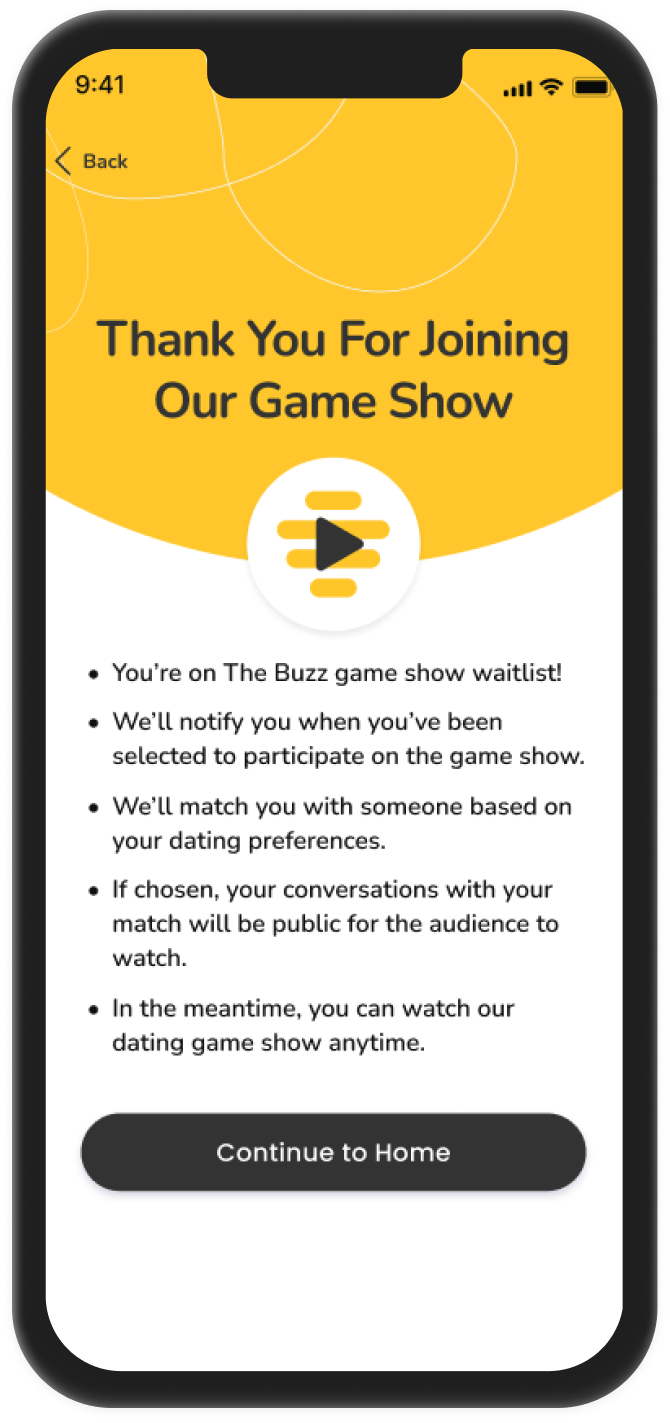
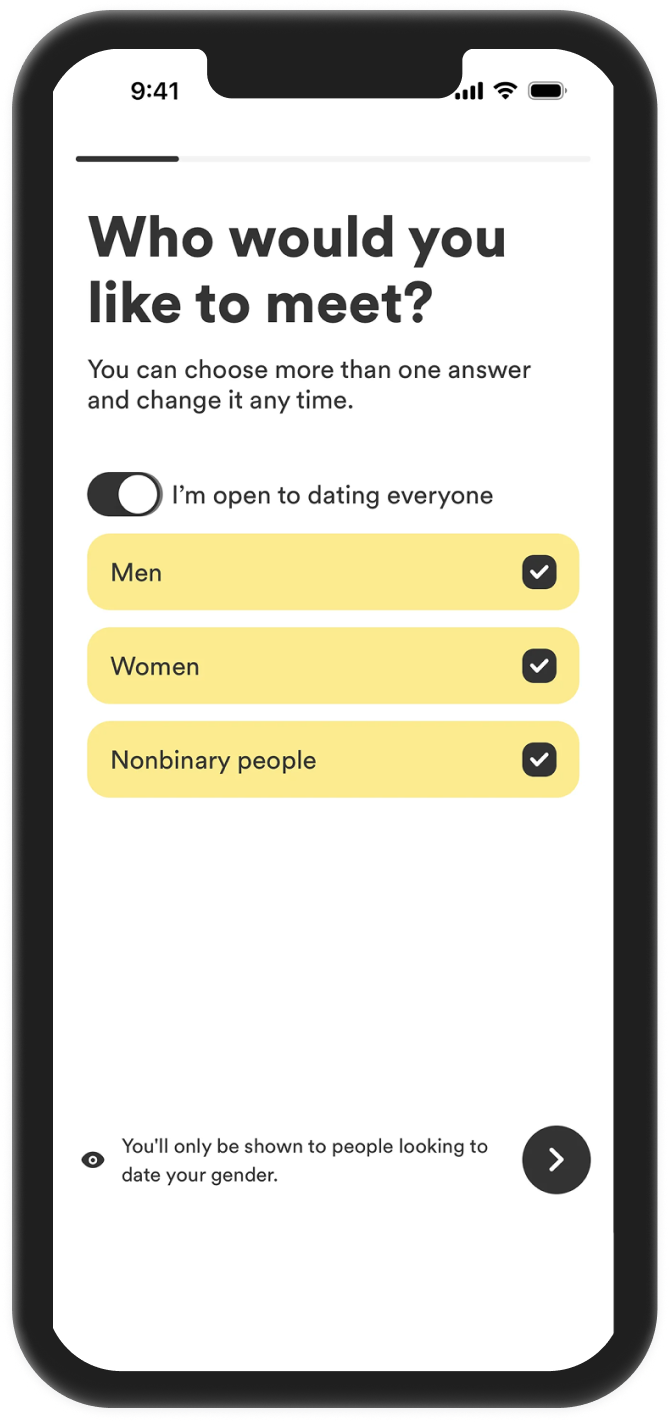
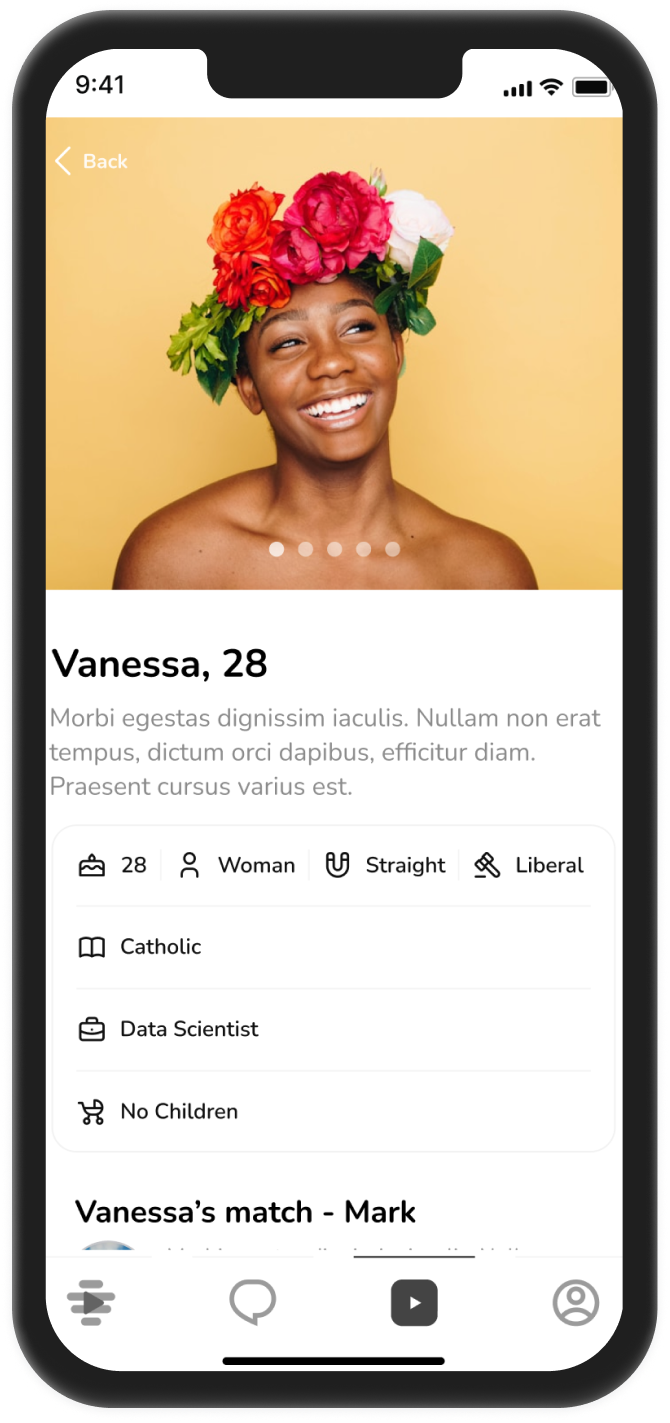
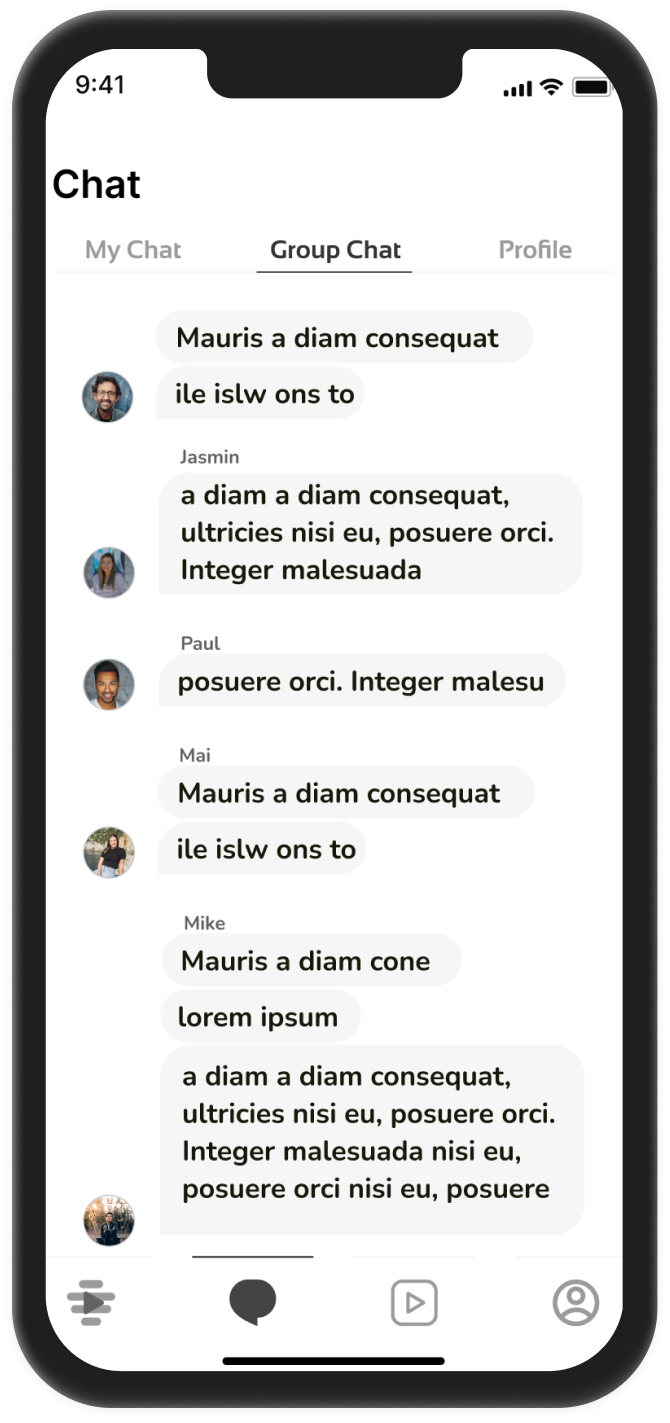
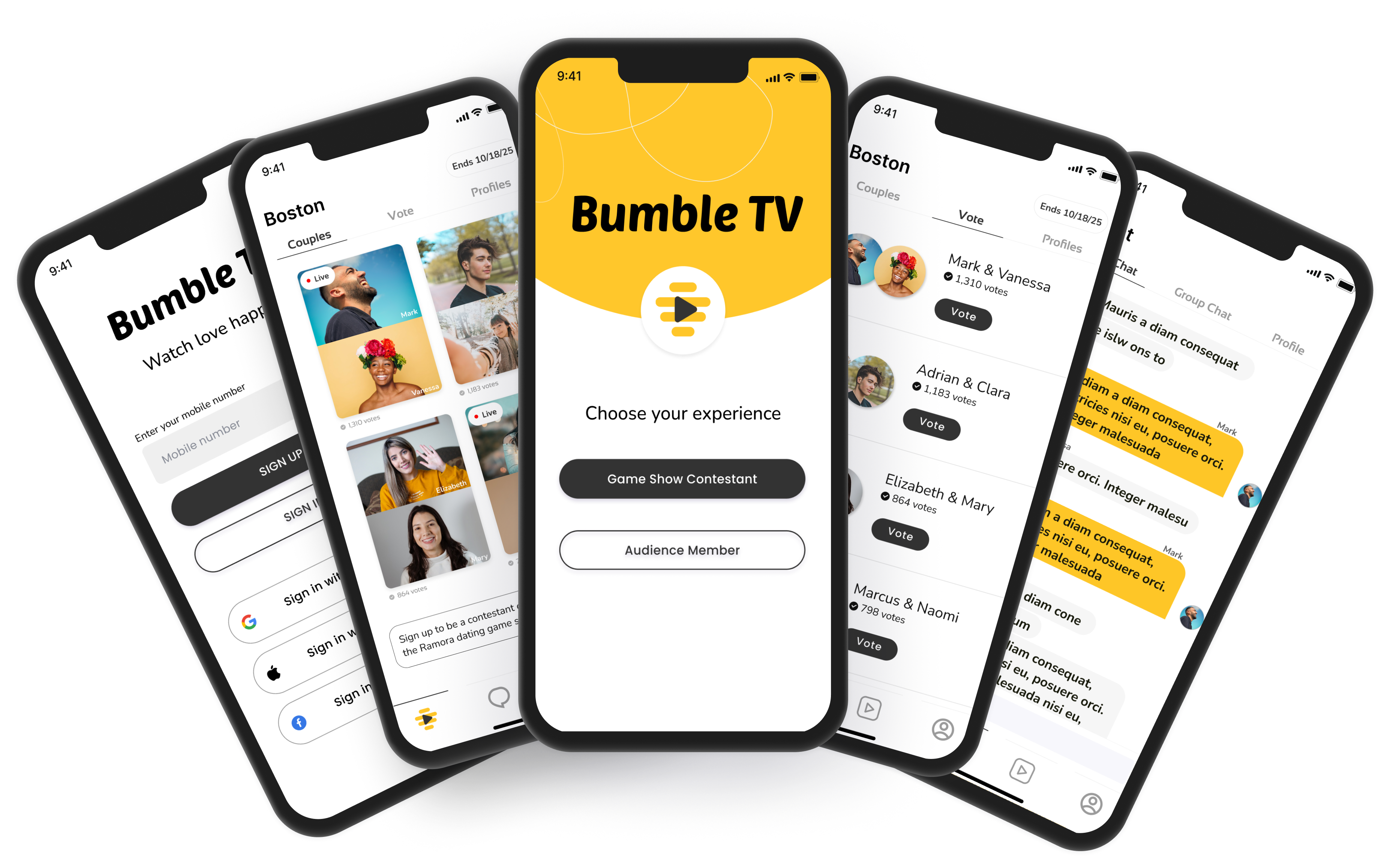
These mockups bring Bumble.tv to life within Bumble's design brand. Naming and logo are placeholders; account creation would plug directly into Bumble's existing authentication flow.
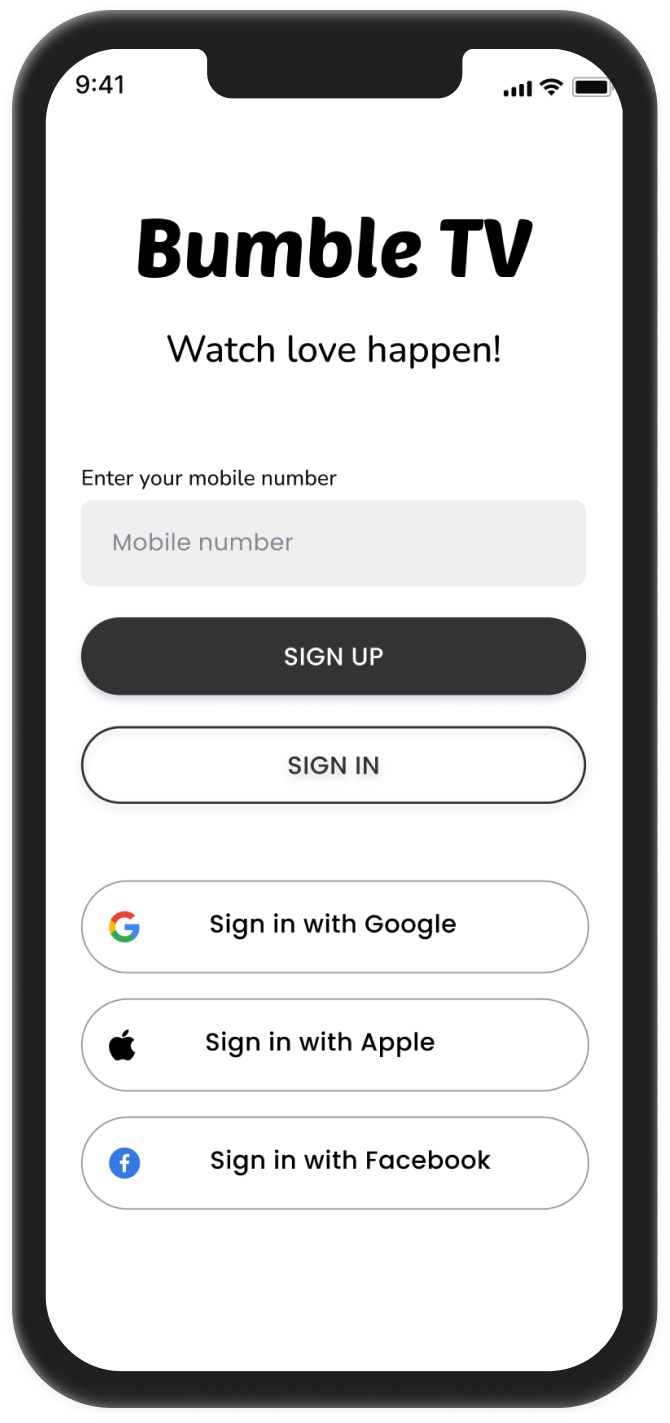
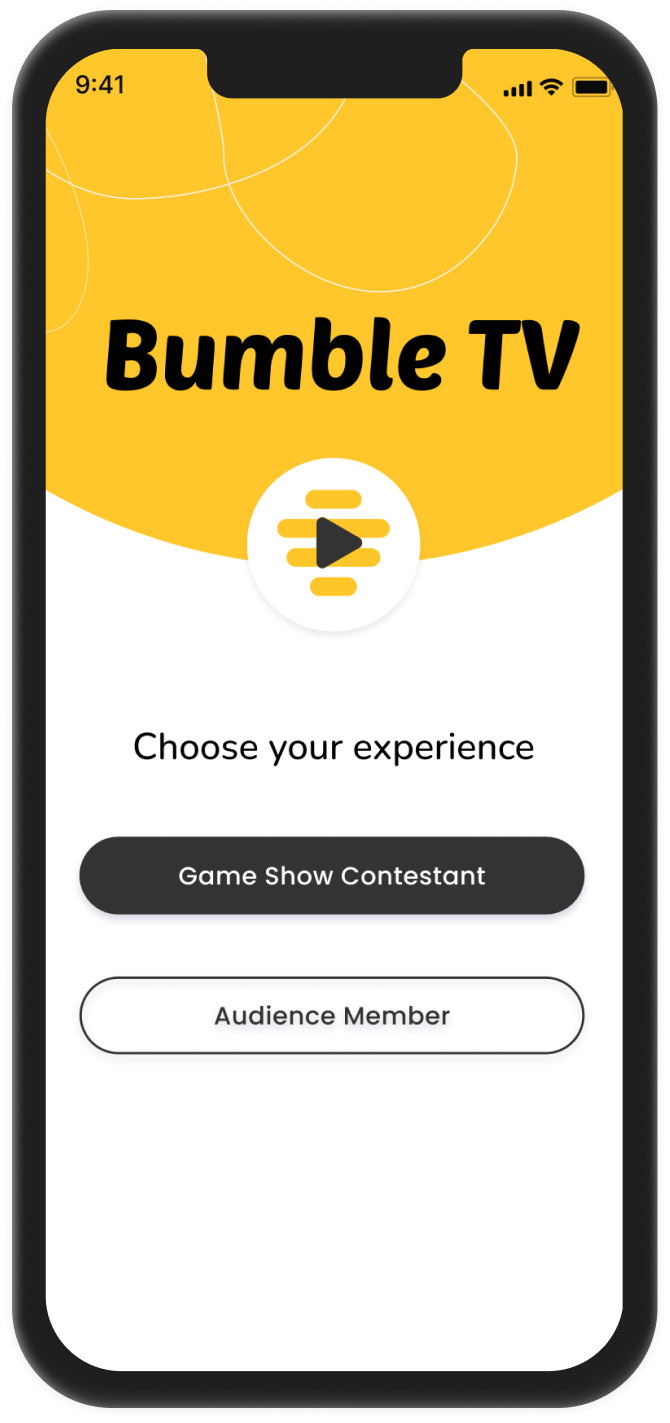
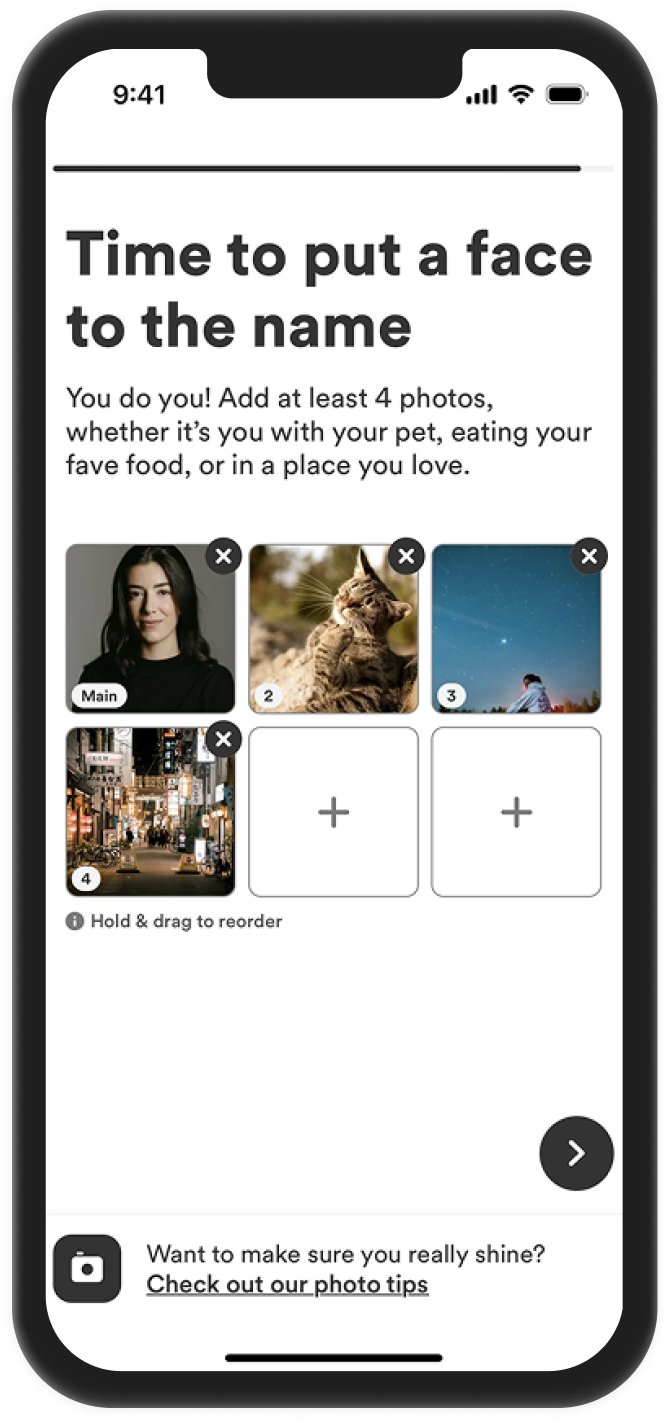
The Buzz uses Bumble's existing profile creation flow — so every contestant automatically becomes a Bumble user. For the 50M+ people already on Bumble, signing in is instant.

All contestant communication happens inside the Bumble app — driving engagement on Bumble's core platform throughout the show.
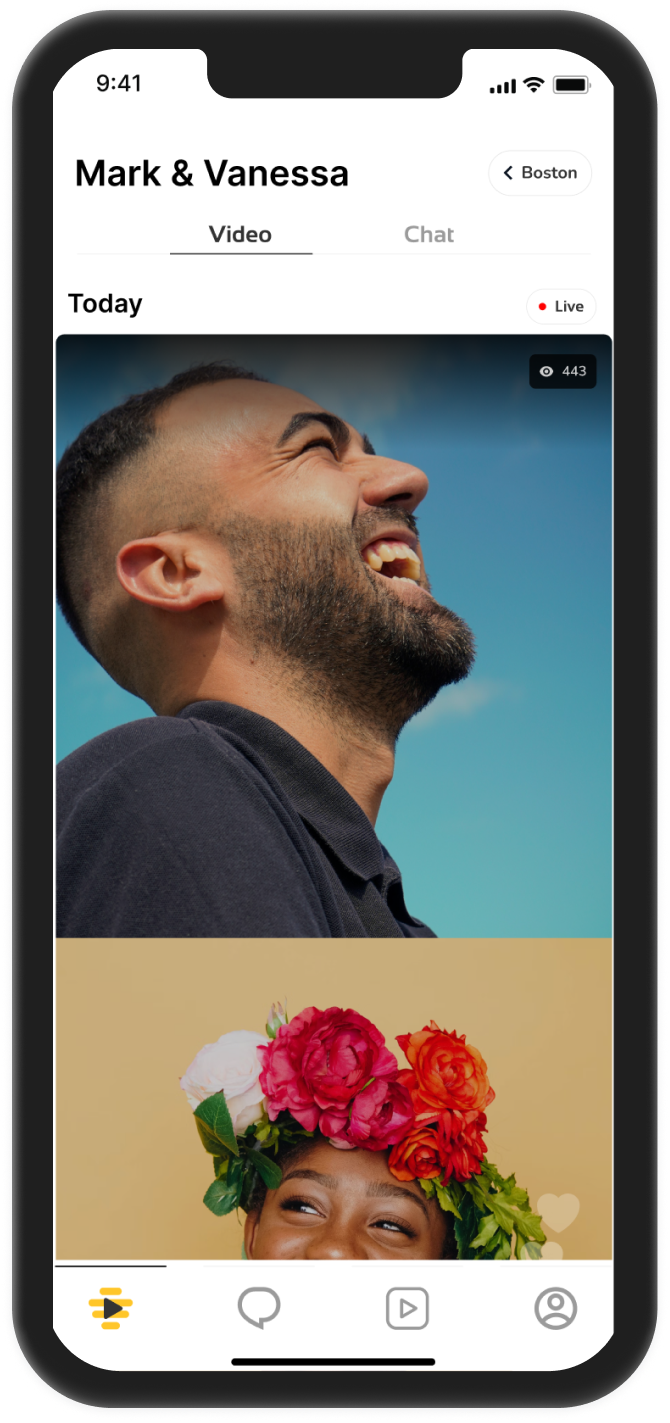
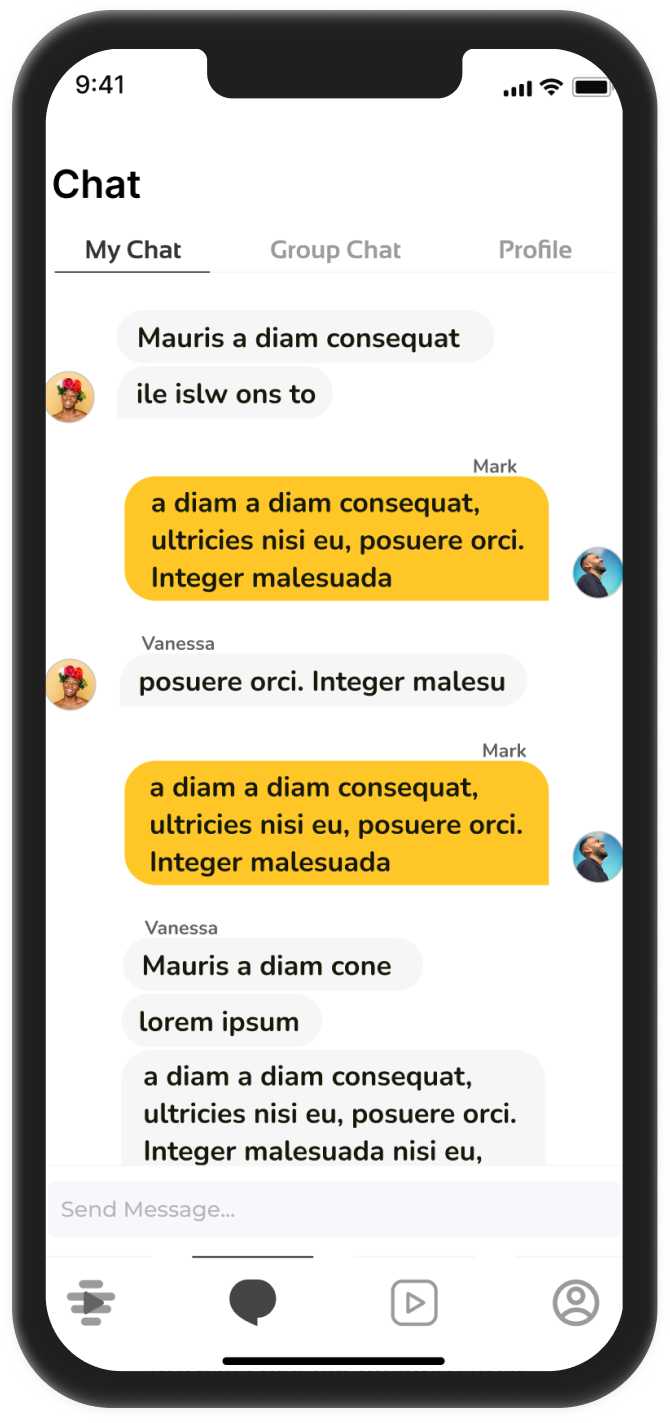
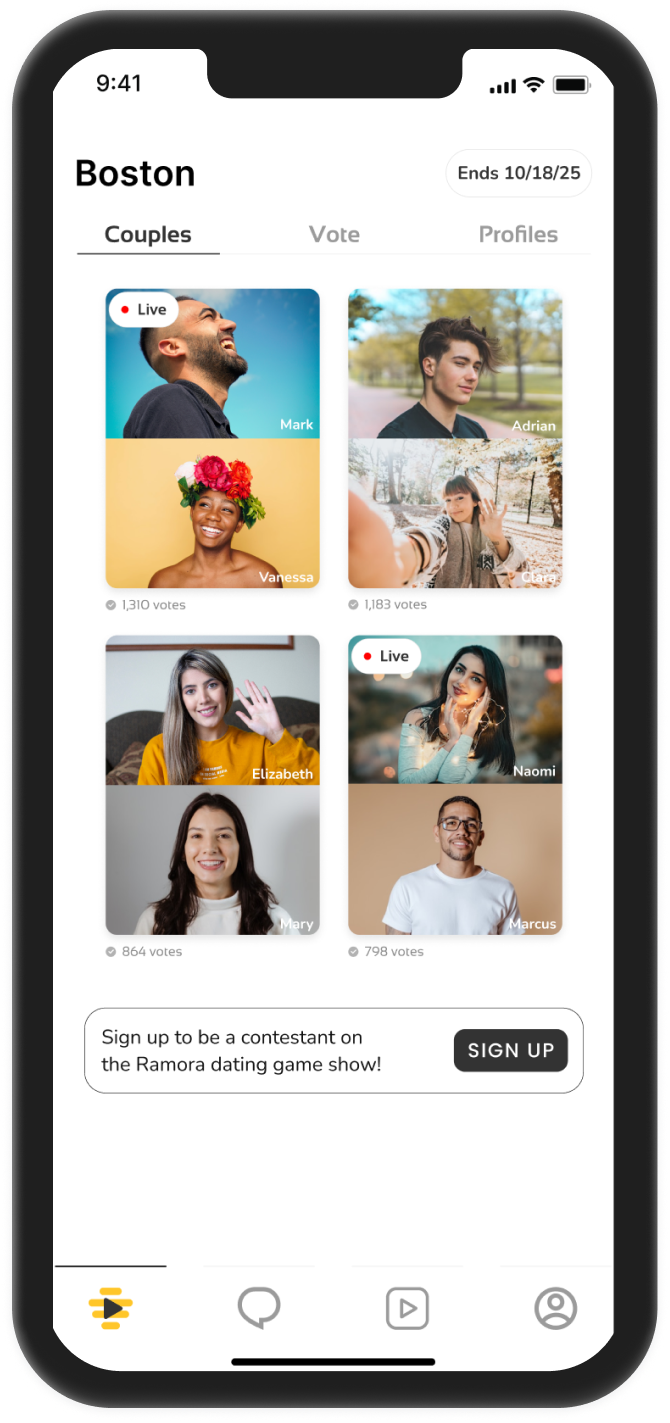
Viewers tune into live matchmaking game shows from cities around the world — chatting with fellow fans in city-specific rooms and voting for the couples they want to win.
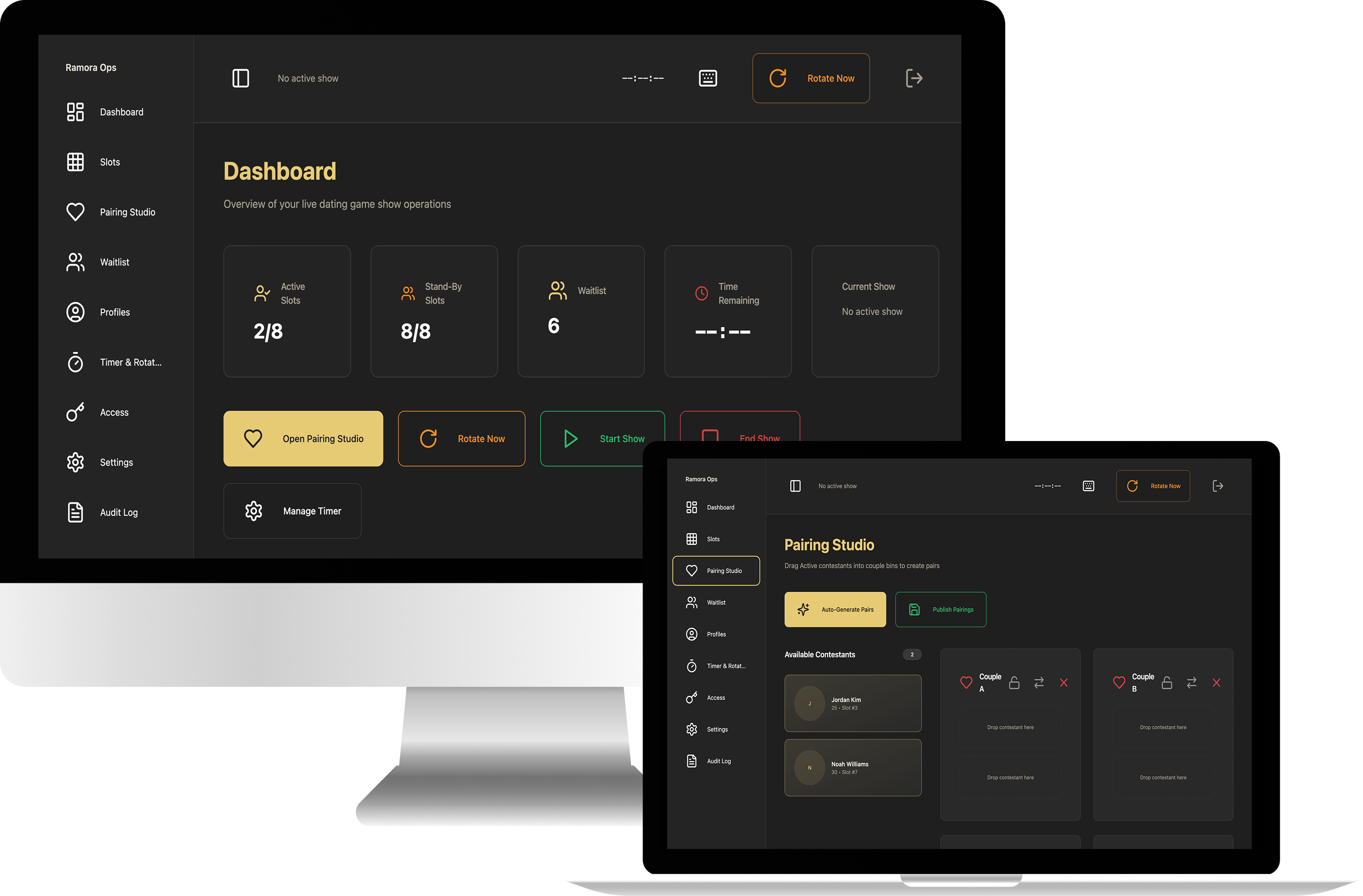
The admin portal allows Bumble to control which Bumble users participate in the game shows.
Market Signal

The numbers prove there's a market

The dating entertainment category is not speculative. It is one of the most consistently high-performing content genres on streaming, and the audience engaging with it is the exact demographic Bumble serves — 72% of Bumble users are under 35, with an average user age of approximately 26 (Swipestats), placing them squarely in the core viewership of dating entertainment.

200+
Dating game shows produced globally in the past decade — all passive, none interactive
Ranker, Business Research Insights, 2025
7B+
Minutes streamed for Love Is Blind Season 6 alone in 2024
Luminate / Nielsen, 2025
8B+
Minutes streamed — Love Island USA S6 across its ~40-episode daily run
Luminate / Business of Apps, 2024
3B+
Minutes streamed — The Bachelor S28 across ~10 weekly episodes
Business of Apps / South Denver Therapy, 2024
"Love Is Blind is the number one most-watched streaming original series of all time in terms of total appearances on the Nielsen Streaming Top 10, and the top unscripted streaming program of all time."
Wikipedia / Nielsen, citing Season 6 viewership peaking at 2.11 billion minutes in a single week

This is not a niche. It is the mainstream. And yet no company has built an interactive, participatory version of this format — one where the audience doesn't just watch the show, but is in the show. Dating show audiences are enormous and growing. No product yet bridges these two audiences.
Bumble.tv is that bridge.
Importantly, the video dating segment is identified by Precedence Research as the fastest-growing feature category in online dating — growing faster than chat, profiles, or discovery. A game show format is the ultimate form of video-led connection.
(Precedence Research, Online Dating Services Market Size to Hit USD 11.27 Billion by 2034, 2025)

Brand Alignment

Why Bumble.tv strengthens Bumble specifically

Bumble.tv is not another dating product. Its values are structurally aligned with Bumble's brand — and it fills gaps Bumble's current product suite does not address.

1
Generates brand-native entertainment content
Bumble already invested in the community with its acquisition of Geneva in 2024. Bumble.tv is the natural media arm — video content that is both the product and the marketing. Every episode is shareable and has viral potential. Every match creates a social moment. The show does its own marketing.
2
Attracts the Gen Z audience Bumble is losing
A 2024 survey by Morning Consult found 62% of Gen Z preferred in-person meetups over dating apps, citing superficiality. A game show format reintroduces stakes, personality, and real emotional investment. Gen Z is the country's second-largest demographic — and the marketplace for shows geared toward 20-somethings is almost wide open (The Ankler, 2025).
3
New premium revenue model
Bumble.tv creates a second monetization layer entirely: sponsorship, paid access to contestants, advertising — all recurring, all high-engagement. This is not replacing the core app's revenue; it is building an adjacent one.
4
Earned media at scale
Dating show participants generate influencer-level social followings. Bumble.tv creates a recurring pipeline of authentic brand ambassadors — people whose love stories began on Bumble's platform, publicly, in front of an audience.
5
Extending the Bumble product family coherently
Bumble BFF finds friends. Bumble Bizz builds professional networks. Bumble.tv showcases the core product of Bumble — romantic connections. It fits the suite. It expands the TAM. And it gives Bumble something competitors lack — a format with an identity. Where other apps lose users to swipe fatigue, Bumble.tv keeps them engaged — watching others find love on Bumble until they're inspired to find it themselves.
Strategic Urgency

Why partner now — and not wait

Scenario A
Bumble partners now
John Dufresne joins Bumble to lead development of Bumble.tv, built on the Ramora concept. Bumble launches the first dating game show app using its 50M+ user base as an instant audience. By moving early, Bumble defines the category and owns the brand association before competitors emerge.
Scenario B
Bumble acquires later
Ramora launches independently and gains traction as a dating game show platform. As the format proves successful, Bumble decides to acquire the product to enter the category. Instead of building it early, Bumble pays a venture-level acquisition price for something it could have launched first.
Scenario C
Bumble builds in-house later
After seeing the format succeed elsewhere, Bumble assembles an internal team to build a similar product. Development takes time as the company designs their own unique gameplay and validates the concept. By launch, Bumble enters the market behind the original creator.
Scenario D
Another company creates the category
A third-party startup or media company launches the first successful dating game show app. The format becomes culturally associated with that brand. Bumble eventually enters the space but is no longer perceived as the innovator.
The cost of Scenario A is the lowest possible entry price to own this category. Every other scenario carries a higher financial cost, a longer timeline, and a weaker brand position. The question is not whether the dating game show format will exist as an app — the viewership data makes that inevitable. The question is whether Bumble will own it.
1
Contractor costs vs. Reactive costs
Building Bumble.tv with John Dufresne as the PM means first to market, design thinking already established, and bringing the passion that conceptualized the concept in-house.
2
The builder already has the vision
The Ramora concept is already designed, validated, and ready to execute. Bumble doesn't need to incubate the idea from scratch — it needs to decide whether to own it or compete with it. Hiring the originator eliminates the discovery phase.
3
First-mover brand ownership vs. Acquisition cost
If Ramora achieves product-market fit as an independent brand, its acquisition price reflects venture multiples on validated traction — potentially $50M–$200M+, depending on growth. The cost of development today is a fraction of that. Bumble chooses its entry price right now.
4
Category creation is a one-time moment
The dating game show app category is pre-defined by TV formats but entirely unoccupied in mobile. That moment of category creation is now.
The Proposal

What partnership looks like

The ask, plainly stated

Hire John Dufresne, the creator of Bumble.tv (Ramora) as a Product Manager to launch Bumble.tv as a Bumble-branded product. John Dufresne will bring the full product vision, complete UX strategy, and executional expertise — overseeing development through to a beta launch in New York City within 6-12 months. Bumble brings the brand, the user base, and the infrastructure.

The result is a new product category owned entirely by Bumble, launched with 50M+ users already in-network.

If Bumble declines, the Ramora brand builds independently. When Ramora achieves traction, Bumble will face a choice between acquiring it at venture multiples or competing with a format it had the opportunity to own first. That is a significantly worse position — financially and strategically — than the one available today.

The dating entertainment category will exist. The only question is who defines it. Bumble has the brand equity, the user trust, and the distribution to do it first. John Dufresne has the product vision, the UX strategy, and the execution readiness to make it happen now.
Schedule Meeting