A strategic partnership pitch

Parley

A Civil Engagement Platform for the Era of Polarization

Why now. Why Bumble. Why this team.
Schedule Meeting
Background

Designing the Foundation

I designed Parley, a civil discourse game app, from ideation to prototype. I led the project as PM, and UX designer. Through 100+ pitch feedback sessions, I validated the concept and iterated from low-fidelity wireframes to a fully realized prototype.

I propose bringing the work I developed for Parley into the your product suite, creating an engaging experience for both current users and new audiences.

Parley Case Study

Parley is a civil debate platform that transforms polarized political discussion into a structured, fact-based gamified experience. The concept addresses a growing problem — public trust in institutions is declining while online political conversations increasingly reward outrage over understanding. Research shows that most Americans want less divisiveness and more productive dialogue.

The demand for healthier discourse is clear. What's missing is a platform designed to make thoughtful debate engaging, accessible, and scalable. Parley fills that gap.

User Flow

How Parley Works

The following are the basic steps in Parley’s user flow. Participants join a debate, review verified fact cards, present arguments, and respond to opposing viewpoints within a guided structure. Users evaluate each other on factual accuracy, reasoning, and empathy, building understanding through constructive participation.

The Buzz
by Bumble

Dating Game
Show App
1.
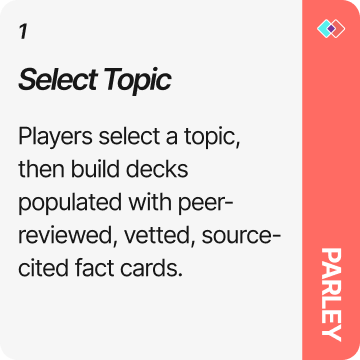
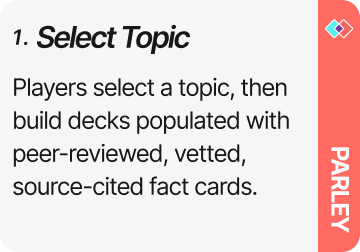
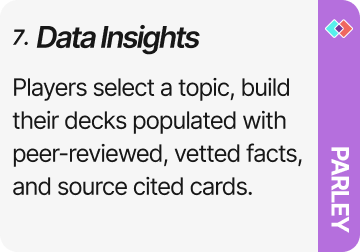
Players select topic decks populated with peer-reviewed, vetted facts
2.
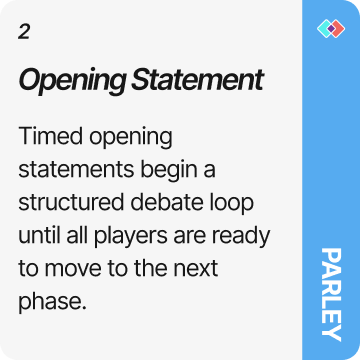
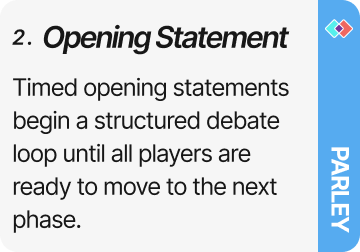
Timed opening statements begin a structured debate loop
3.
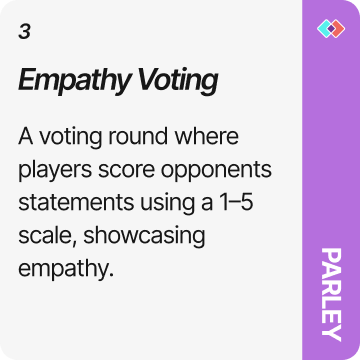
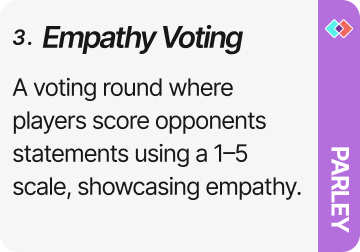
A voting round scores responses on empathy using a 1–5 scale
4.
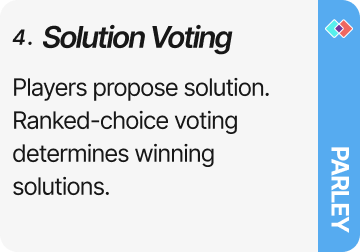
Ranked-choice solution voting determines winning arguments
5.
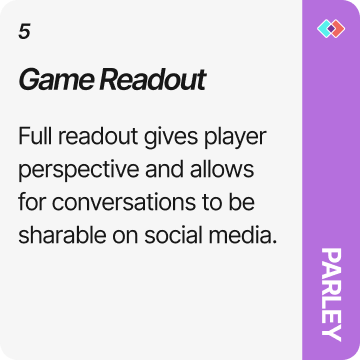
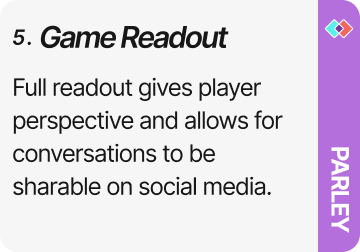
Full readout keeps conversations constructive and forward-moving
6.
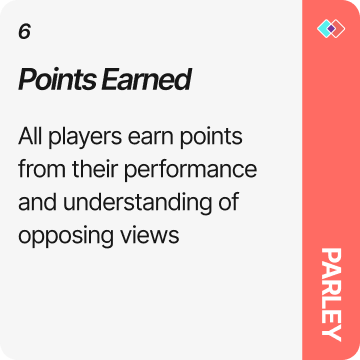
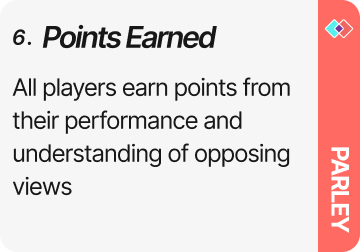
Players earn points by demonstrating understanding of opposing views
7.
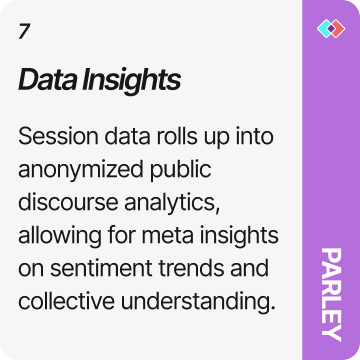
Session data rolls up into anonymized public discourse insights
8.
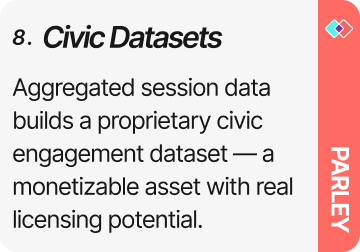
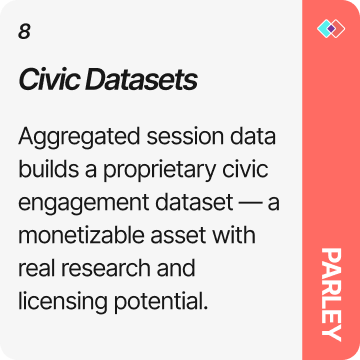
Aggregate research creates a proprietary civic engagement dataset
9.
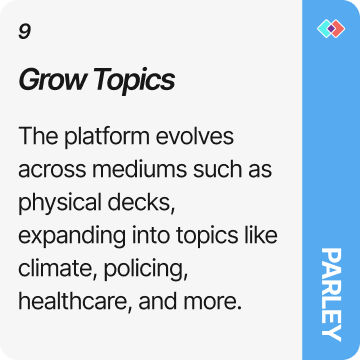
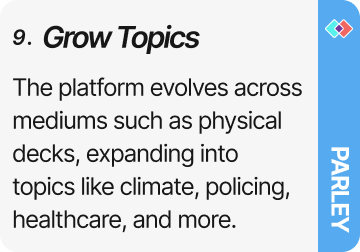
The platform scales across topics: climate, policing, healthcare, and more
1.
Players select topic decks populated with peer-reviewed, vetted facts
2.
Timed opening statements begin a structured debate loop
3.
A voting round scores responses on empathy using a 1–5 scale
4.
Ranked-choice solution voting determines winning arguments
5.
Full readout keeps conversations constructive and forward-moving
6.
Players earn points by demonstrating understanding of opposing views
7.
Session data rolls up into anonymized public discourse insights
8.
Aggregate research creates a proprietary civic engagement dataset
9.
The platform scales across topics: climate, policing, healthcare, and more

Design Decisions

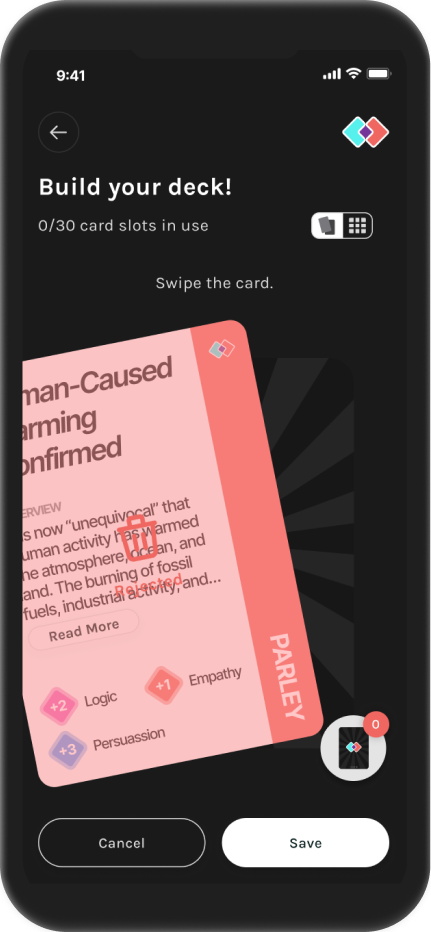
I designed the home page as a player dashboard, enabling quick access to saved decks or starting new games. The primary CTA sits above the fold to encourage fast action, while clear hierarchy, modular sections, and social features like leaderboards support engagement and retention.

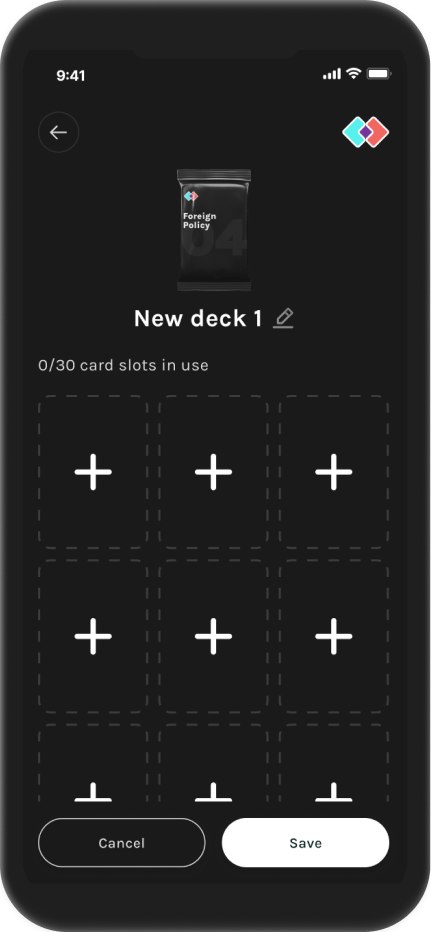
I wanted to balance speed with depth. Some users just want to jump in, so I included pre-made decks for instant gameplay. Others prefer more control, so custom deck building lets them explore and understand each card before the game begins, increasing ownership and engagement..

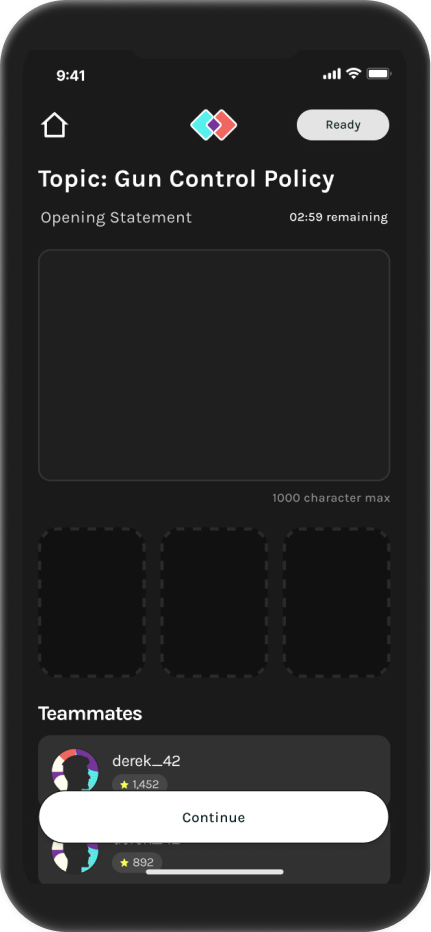
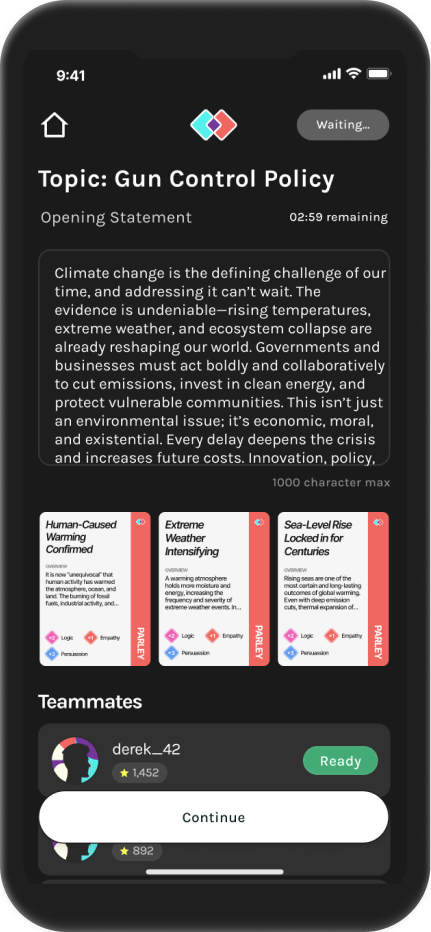
I designed this phase to create space for uninterrupted expression while keeping momentum intact. The timer ensures progress, even if someone drops off. A “Ready” CTA gives players control over pacing, and Parley Cards ground statements in vetted facts to reduce misinformation and keep discussions constructive.
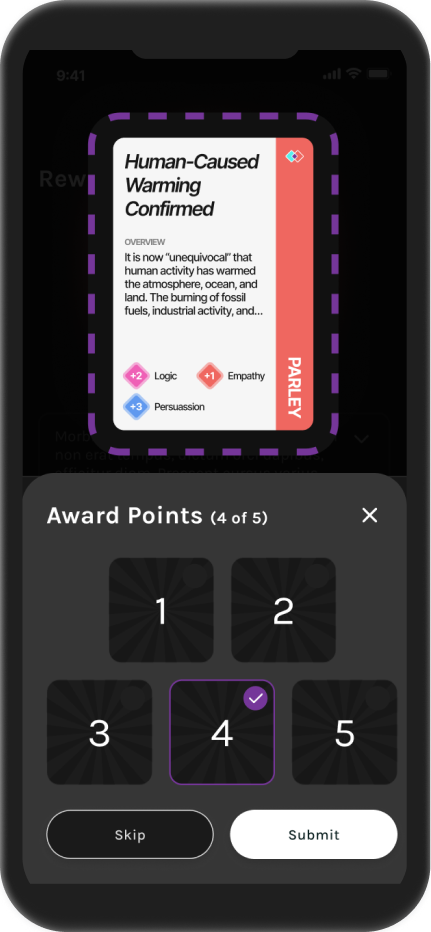
I introduced empathy-based voting to let users acknowledge their opponent’s perspective. Using a 1–5 scale (excluding 0) ensures everyone earns points and feels recognized. Points are assigned through an in-context drawer interaction, keeping the experience fluid while maintaining clarity in voting decisions.

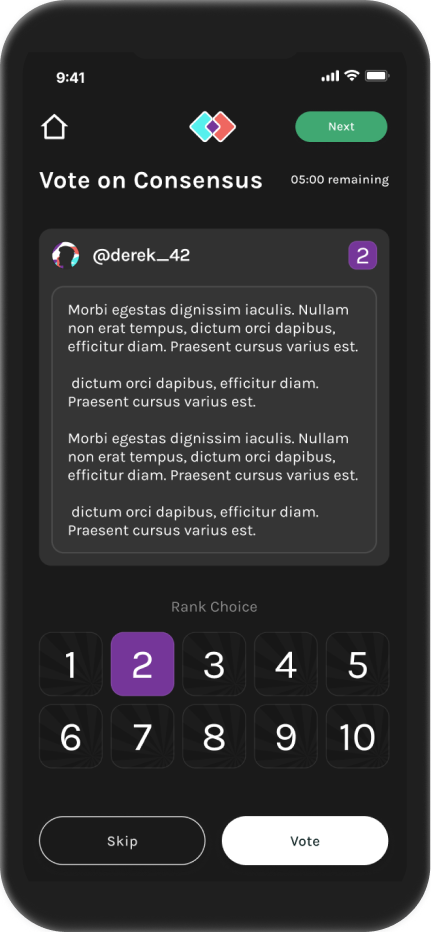
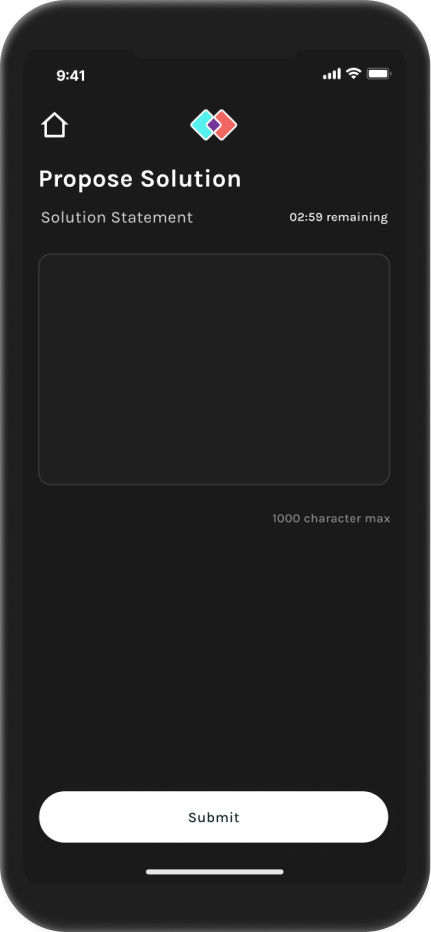
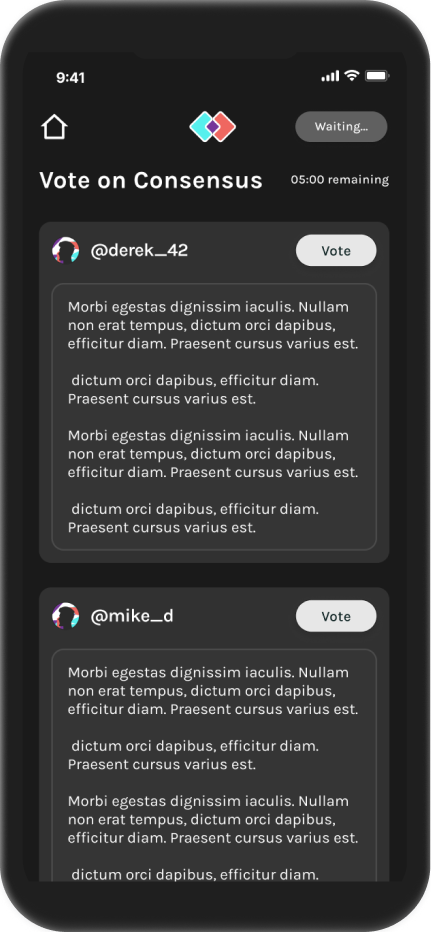
I included a Solution Statement phase because conversations often stall at personal opinion. I wanted users to consider whether their views should translate into real policy. I chose ranked-choice voting to better reflect collective sentiment and capture nuanced group priorities beyond a simple majority vote.
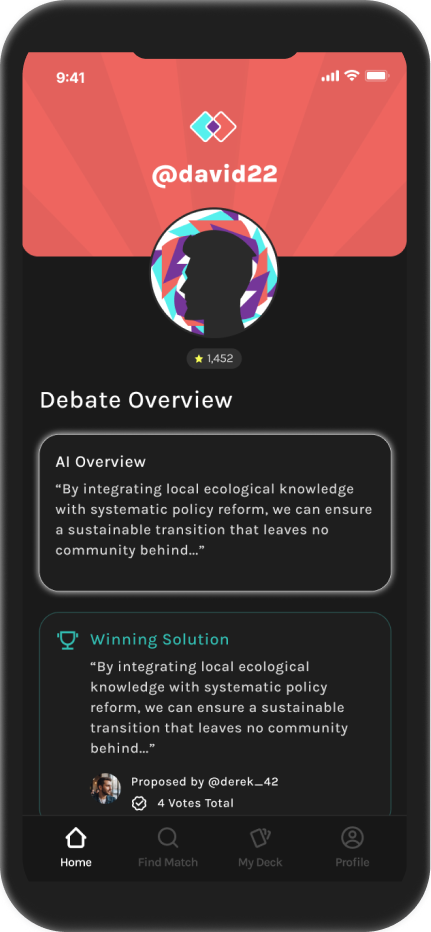
I chose to end the experience with a comprehensive readout to give users a clear moment of reflection. By surfacing key highlights and outcomes, players can better understand how they, and others, responded to the topic. I also designed this phase so aggregated session data could inform broader research into how users think and engage with complex issues.
Market Signal

Civil discourse is failing — and the data proves it

Political polarization in the United States has reached a measurable crisis point. The following statistics define the scope of the problem Parley is designed to address.

80%
of U.S. adults say the country is greatly divided on the most important values
Gallup, 2024
86%
of Americans say they feel exhausted by political division in the United States
Listen First Project
53%
of Americans say fellow citizens are “morally bad,” the highest among 25 countries surveyed
Ipsos Global Trust Survey
$10.2B
spent on political advertising in 2024 — yet discourse continues to deteriorate
Statista / AdImpact, 2024
"As of 2025, polarization was higher than at any point in modern history, causing less collaboration and mutual understanding — members of both parties increasingly view each other in an extremely negative way."
Polarization Research Lab, 2025

The problem is not a lack of political information. Readers consume more political news than ever. The problem is the absence of a structured, safe, and rewarding space for cross-partisan conversation. Parley fills that gap.

Brand Alignment

Why partnership strengthens the brand

A trusted organization with a large base of professional subscribers, strong recurring-revenue subscriptions, and hundreds of millions in annual revenue is uniquely positioned to host civil discourse—not just report on it. Parley is a natural extension of that role.

1
Fact-first DNA
Your organization already curates and vets political information at scale. Parley's fact card library is a direct extension of existing editorial infrastructure.
2
Audience fit
The core users is politically engaged, educated, and policy-aware — the exact users who would find value in structured, substantive debate.
3
Pro product model
Users already pay for tools that help them engage with policy more effectively. Parley is the consumer-facing complement to the professional suite.
4
Brand differentiation
As AI-generated news summaries flood the market, owning the space for civil engagement creates a defensible, mission-aligned moat.
5
Institutional credibility
Nonpartisan positioning is essential infrastructure for a product that must be trusted by users across the political spectrum.
Strategic Urgency

Why partner now — and not wait

Scenario A
Partner now
Parley launches as a branded product built on your infrastructure and distributed to your existing audience. You define the civil engagement app category before any competitor can. First-mover brand ownership at the lowest possible entry cost.
Scenario B
Acquire later
Parley launches independently and gains traction. You decide to acquire the product to enter the category. Instead of building it early, you pay a venture-level acquisition price — potentially $50M–$100M+ — for something you could have launched first.
Scenario C
Build in-house later
After seeing the format succeed elsewhere, you assemble an internal team to build something similar. Development takes time. By launch, you enter the market behind the original creator — without the design foundation that already exists today.
Scenario D
Another company creates the category
A competitor, civic tech startup, or media company launches the first successful civil debate app. The format becomes culturally associated with that brand. You eventually enter the space — but you are no longer the innovator. You are the follower.
The civil engagement app category is pre-defined by the problem — polarization, misinformation, civil disengagement — but entirely unoccupied in mobile. That window of category creation is open right now.
1
The builder already has the vision
The Parley concept is already designed, user-researched, and ready to execute. You don't need to incubate the idea from scratch — you need to decide whether to own it or compete with it. Bringing in the originator eliminates the entire discovery phase.
2
First-mover ownership vs. acquisition cost
If Parley achieves product-market fit as an independent brand, its acquisition price reflects venture multiples on validated traction. The cost of development today is a fraction of that. You choose your entry price right now.
3
Category creation is a one-time moment
The civil engagement app category is entirely unoccupied in mobile. That moment of category creation is now. Once another brand occupies it, the association is permanent — and you will forever be entering someone else's space.
4
The 2026 midterm cycle is the launch window
Civil engagement demand peaks during election cycles. A Q4 2026 launch — timed to the midterms — gives Parley its highest-visibility debut in front of the most politically engaged audience of the year.
The Proposal

What partnership looks like

The ask, plainly stated

Hire John Dufresne, the creator of Parley as a Product Manager to launch Parley as a branded product within your organization. John Dufresne will bring the full product vision, complete UX strategy, and executional expertise — overseeing development from beta launch through long-term growth, as a committed member of the team.

The result is a product that owns the category — gamified civil discourse — built on a brand your audience already trusts.

If you decline, the Parley brand builds independently. When Parley achieves traction, you will face a choice between acquiring it at venture multiples or competing with a format it had the opportunity to own first. That is a significantly worse position — financially and strategically — than the one available today.

Civil discourse is a growing need. Parley is ready to meet it.
The foundation is built. Let's bring it to the world together.
Schedule Meeting